Old Retired Guy Blog



Oct 21 - Nov 1, 2006
|
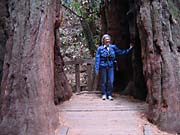
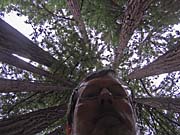
South to Yosemite & San Francisco (Page 6/6)[October 30] It was gray, cool, and drizzling when we left San Francisco. We headed north on Hwy 1 and stopped at Muir Woods National Monument, a great grove of redwood trees that was donated to the government for the purpose of a park. President Theodore Roosevelt used the powers of the Antiquities Act to create Muir Woods National Monument in 1908. We were lucky to have such forward thinking men like Teddy Roosevelt around at that time. He created a large number of National Monuments, many of which later became National Parks. (A president can create a National Monument but it takes an Act of Congress to create a National Park.)
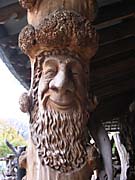
Like Yosemite, Kathy and I had also been to Muir Woods in 1974. At that time we discussed buying a redwood carving of a redwood tree that we saw in the souvenir shop. We liked it but we were both unemployed at the time and were really pinching pennies in order to make our trip last as long as possible. Many times in the years after we often referred to this as an example of a lost opportunity. So, when we went into the gift store and saw similar types of carvings, we bought one.
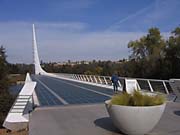
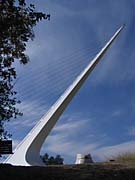
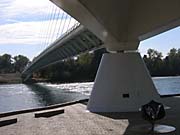
[October 31] We are now heading north again on I-5, mainly putting on miles to get home. The high point of today's drive was, in of all places, Redding, California. I mean no disrespect to the people of Redding, but I didn't expect to find in that town a stunning bridge designed by the world-renowned architect Santiago Calatrava. The bridge is a footbridge in a park and is known as the Sundial Bridge at Turtle Bay. According to the Sundial Bridge website,
We wandered around and on the bridge for quite a while before having lunch at an outdoor cafe with a view of the bridge.
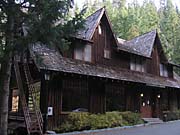
I should point out that I am not a student of or an expert on architecture (as if anyone would think so). The only reason I've ever heard of Santiago Calatrava is because he designed the new Milwaukee Art Museum, which is the first Calatrava-designed building in the United States. [November 1] We continued heading north on I-5 with the goal of making it back home by tonight. We did, however, take a bit of a detour to visit Oregon Caves National Monument. A couple of years ago we saw a series on PBS about the great hotels in the National Parks. Much to our surprise, one of the episodes was about the hotel in Oregon Caves National Monument! I would never have guessed that. The lodge was originally called "The Chateau" and was completed in 1934.
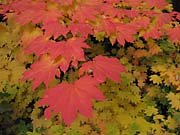
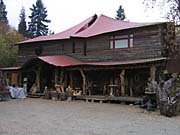
We had to go quite a few miles out of our way to get to the Monument, but the drive was beautiful. Once again the combination of weather and autumn colors did their best to amaze us. When we got to the Monument we discovered to our great dismay that the lodge had just closed for the winter. The previous weekend was the last of the season; we missed it by 2 days! All we could do was walk around the outside and peak in the windows -- not a very satisfying alternative. As we headed back to the interstate we encountered a totally unexpected treat -- a great wood working shop with hundreds of fascinating carvings and wooden art work. The name of the place is "It's a Burl" and it's located near Kerby, OR. If you get a chance to stop in I think you'll find it worth your time. We didn't buy anything there; I hope that we don't regret it!
End of South to Yosemite & San Francisco Entry |
 Leaving
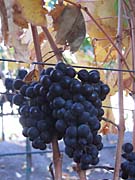
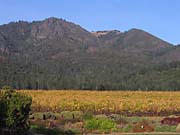
Muir Woods, we headed further inland to Napa and Sonoma Valleys. By now
the weather was again sunny and warm. Almost all of the vineyards that we
passed had already harvested their grapes. Only a few had ripe clumps of
grapes shaded under golden leaves. We stopped at a couple of wineries to
sample their latest vintages as well as buy a small souvenir or two. Then
we drove on to find a place to stay for the night.
Leaving
Muir Woods, we headed further inland to Napa and Sonoma Valleys. By now
the weather was again sunny and warm. Almost all of the vineyards that we
passed had already harvested their grapes. Only a few had ripe clumps of
grapes shaded under golden leaves. We stopped at a couple of wineries to
sample their latest vintages as well as buy a small souvenir or two. Then
we drove on to find a place to stay for the night.